Exploring Tahitian Femininity in Gauguin’s Nafea Faa Ipoipo
Nov 14, 2025
Paintings
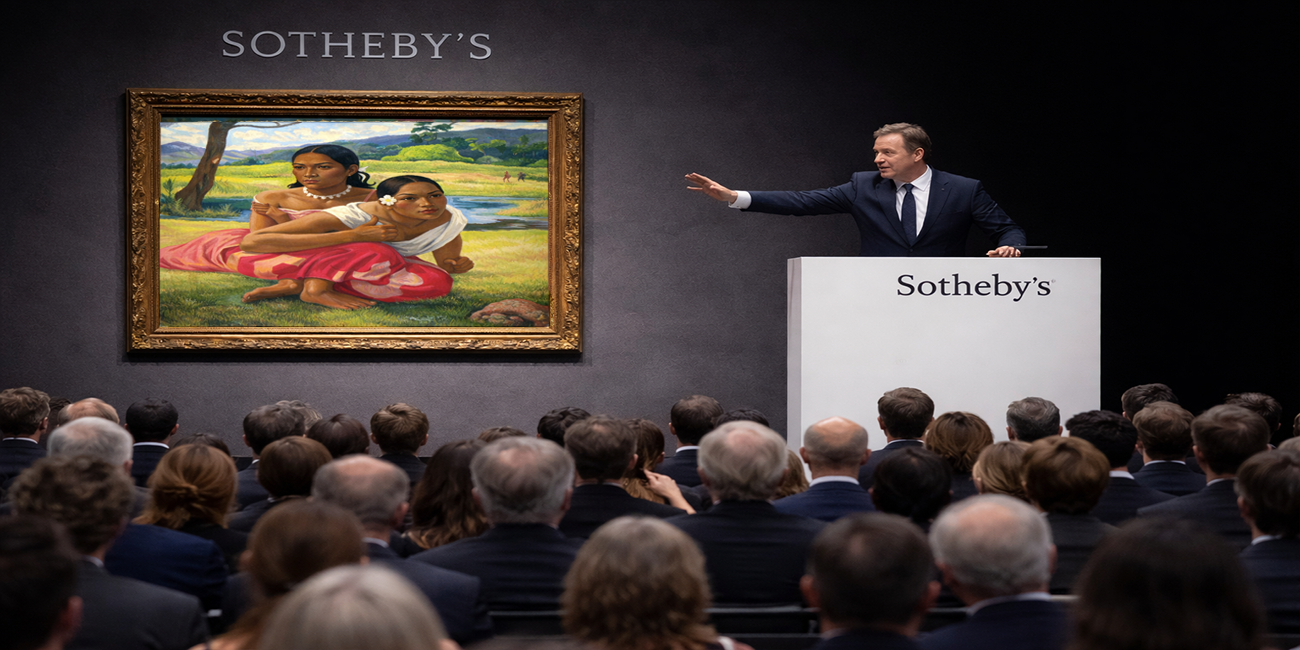
Island Beauty and Mystery – Nafea Faa Ipo Ipo
Paul Gauguin’s Nafea Faa Ipoipo (When Will You Marry?), painted in 1892 during his first transformative stay in Tahiti, stands as one of the most powerful visual documents of his artistic philosophy and emotional search for an untouched “paradise.” It is not merely a portrait of two Tahitian women—it is a layered reflection of cultural transition, identity, spirituality, and Gauguin’s deep internal struggle between longing, escape, and artistic rebellion.
Historical Context: Gauguin’s Escape to
Tahiti
By the early 1890s, Gauguin felt suffocated
by European society—its industrialization, its judgments, and its artistic
expectations. He dreamed of a “primitive Eden,” a place where he believed life
was pure, natural, and uncorrupted. Tahiti, described romantically in travel
literature, became his imagined sanctuary.
But when he arrived, he found a society already impacted by colonization,
Christianity, and Western values. This tension between the idyllic paradise he
sought and the modernizing influences he witnessed becomes a central theme in Nafea
Faa Ipoipo.

The Two Women: Symbolism and Contrast
The painting depicts two Tahitian women
positioned almost like parallel worlds in a single frame:
1. The Seated Woman (Foreground)
- She sits cross-legged, wearing a soft pink dress.
- Her face is calm but introspective, looking slightly away from
the viewer.
- Her posture is delicate, symbolizing innocence, youth, and
emotional vulnerability.
- The pink garment suggests tenderness, femininity, and the
softness of early womanhood.
This figure represents purity and the
unspoken quiet of traditional Tahitian life, untouched by external
influence.
2. The Standing Woman (Background)
- Behind her stands a second woman dressed in a striking blue
missionary-style dress.
- Her raised hand gesture—some interpret it as a sign of
greeting, others as a gesture of caution or authority—adds mystery.
- Her clothing reflects Western influence, particularly that of
Christian missionaries who altered traditional Tahitian customs.
She embodies modernity, change, social
expectations, and the influence of colonization.
The Title: “When Will You Marry?”
The Tahitian phrase Nafea Faa Ipoipo
was commonly used as a social question directed toward young women.
The title introduces themes of:
- Marriage expectations
- Cultural customs
- The transition from adolescence to adulthood
- The societal pressure placed on women
Gauguin uses the title to frame the
painting as a story about identity and social roles in a rapidly changing
world.
Color Theory and Emotional Landscape
Gauguin’s use of color is intentional and
deeply symbolic.
- Lush greens evoke fertility,
nature, and spiritual grounding.
- Warm oranges and earth tones
suggest life, energy, and tradition.
- Deep blues and indigos in the
standing woman’s dress signify authority, religion, and the arrival of
external influence.
- Pinks and soft hues express
innocence and emotional quietness.
Rather than painting a realistic landscape,
he constructs an emotional terrain—a psychological portrait of Tahiti itself.
Composition and Form
Gauguin employs a flattened perspective and
bold outlines, drawing influence from:
- Japanese woodblock prints (ukiyo-e)
- Symbolist aesthetics
- His own desire to reject realism and emphasize feeling
The painting’s layout leads the viewer’s
eye from the gentle calm of the foreground figure to the commanding presence of
the woman behind, creating a visual metaphor for past versus present.
Cultural Duality
The painting captures Tahiti at a moment
when:
- Traditional Polynesian life was still visible
- But Western influence was rapidly reshaping identity, clothing,
rituals, and relationships
Gauguin presents this clash subtly through
posture, clothing, and gesture rather than overt symbolism.
Market and Legacy
In 2015, Nafea Faa Ipoipo became one
of the most expensive artworks ever sold, solidifying its historical and
cultural importance. Its value reflects not only its artistic brilliance but
also its role as a symbol of Tahitian identity, colonial history, and Gauguin’s
quest for meaning.
A Painting of Emotional and Cultural
Duality
Ultimately, Nafea Faa Ipoipo is a
deeply poetic work that blends:
- Personal longing
- Cultural observation
- Symbolist storytelling
- Simple beauty and complex emotion
It is a portrait of a world caught between
innocence and transformation—just as Gauguin himself was torn between artistic
ambition and emotional restlessness.
Recent Posts

The Remarkable Journey of Salvator Mundi: From Obscurity to $450 Million Fame
Nov 16, 2025
Paintings


Nelsavault - Where Luxury Meets Rarity. Shop the costliest treasures only a few can own. Because ordinary was never your style. Only the finest, Only at Nelsavault. Exclusivity Lives Here. Crafted for the Cannoisseur. Curated for you. From secret vaults and whispered lore, Nelsavault opens a hidden door. Shop the Rarest Now.